Auto Portrait 3

That's an automated photo machine on the left. Good enough for me -- for a self-portrait. 
note: no cropping whatsoever

After a night of light showers, it was an overcast day with an abundance of soft lighting ideal for shooting. A walk down some alleyways near the office in Namba revealed some interesting juxtapositions of lines, shapes and colours. There is nothing quite like a Japanese alley...


 Shooting from an LCD screen certainly affords a different perspective than from a viewfinder.
My Power Shot G3 had lain in a cupboard for months ignored. Yesterday while cleaning the apartment I came across the retired digicam and slipped it into my satchel, thinking perhaps I could be inspired to use it on the way to work today. After all, one of my new year resolutions was to shoot more often and more casually.
Here is what I found... ...on the way to the bus stop
 ...on the bus
 ...on the way to the office
 ...at the coffee stand
 ...in front of the office (Smokers always try to ruin the morning).
There was also a stop for a self-portrait:
I played a little with Fireworks today...
Original image is here.
That's a Tottenham Hotspur hat by the way...
Now just what would a smoker be hoping for...? Lung cancer later rather than sooner...?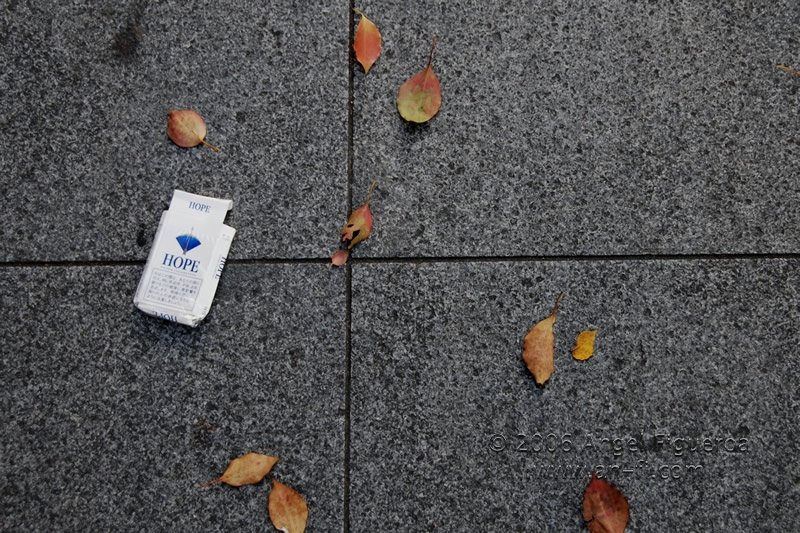
It is surprising how few Osakans know of Maishima. Admittedly I didn't know about it either until recently --even after having lived here for seven years. But it is a real gem, as I discovered on the weekend. Maishima is one of a few artificial islands lying to the west of the mainland, in the Osaka Bay Area. (On the other, better-known islands can be found Tempozan Harbour Village and The World Trade Center). Although Maishima is huge, there are no subway or train lines providing service there. Instead, it is accessible by bus from either Osaka, Nishikujo or Sakurajima stations. I say it is a gem because there are few other places in Osaka where you can plop down on a patch of grass and have a nice picnic or afternoon nap without the din of traffic or other urban nuisances nearby. And --to my knowledge-- there is no other patch of grass with a seaside view.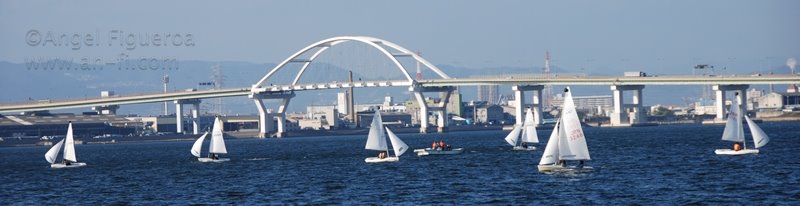
The northern edge of the island is grassland, bordered by a few trees on one side and cement pylons on the other, half submerged in the water. No pretensions here, just grass. That's all I need. I sat down and took in the view of the mouth of Yodogawa River, dotted with a dozen or so small sailing dinghies from a nearby sailing school. Every now and then one of the sailboats would flop sideways into the water and the unlucky student, after an unscheduled swim, would have to cling to the keel before the instructor raced over in his motorboat to help set the vessel upright.
Close by there is Hokko Yacht Harbour, with a surprising number of tall, luxurious yachts moored there. Next to the harbour there is a gleaming white suspension bridge connecting Maishima to Konohana-ku in Osaka proper, and next to the bridge, just on the edge of Maishima, a pair of buildings that can't fail to catch your eye. They proved to be the main attraction of this island for me. The colourful buildings, crowned with huge golden orbs and covered with nonsensical windows and curved red or yellow stripes, seem completely out of place, like a gigantic LEGO building or a set piece from a children's fantasy movie. 
They are the Osaka City incineration and water treatment plants, designed by celebrated Austrian architect Friedensreich Hundertwasser, and built around the time Osaka was bidding for the 2008 Olympic games during a frenzy of government spending in an effort to boost its image as an international, forward-looking city. I guess that meant making an otherwise unpleasant, unwanted utilitarian site into a playful, spirited and fantastical hulk of architecture. It succeeded, at least from this photographer's point-of-view. Rarely have I found a public building so interesting to look at. 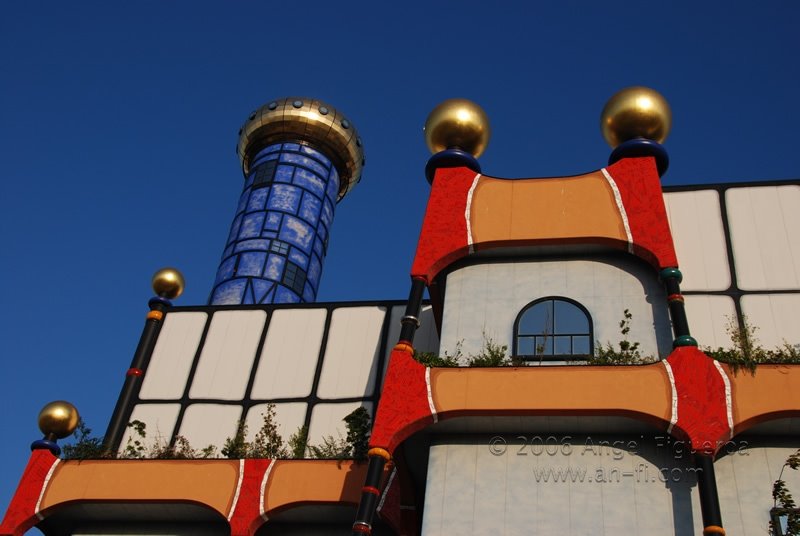
At a cost of around 61 billion yen it infuriated most taxpayers, and also failed to help nab the Olympics. But it is a feather in Osaka's hat, a point of creative frivolity for an otherwise ho-hum city. That's proven by the constant attention it receives from out-of-town visitors, especially those interested in architecture. It is also acclaimed for its ambitious attempt at balancing efficient waste treatment with environmental conservation. 
 I am still puzzled as to why I didn't know about it until recently, but maybe that's because there is no real attempt to promote it to the general public. Perhaps the city government is still smarting from the scandal it generated years ago when it first opened. (Some consider it just another white elephant in a city where other pressing urban issues have been ignored.) Ironically, that was shortly before Universal Studios Japan opened, and passing motorists on the nearby highway 5 often mistook it for the colossal theme park on the mainland to the east. See a map of the Osaka Bay Area.
Well, I was more inclined to walk around these buildings than go to USJ. What a visual treat. Tours of the buildings' interiors are available too. Bring your camera. 
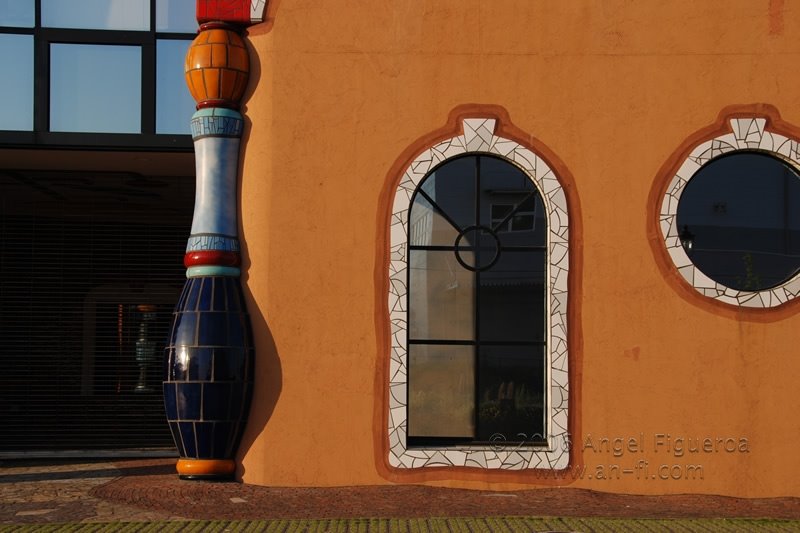
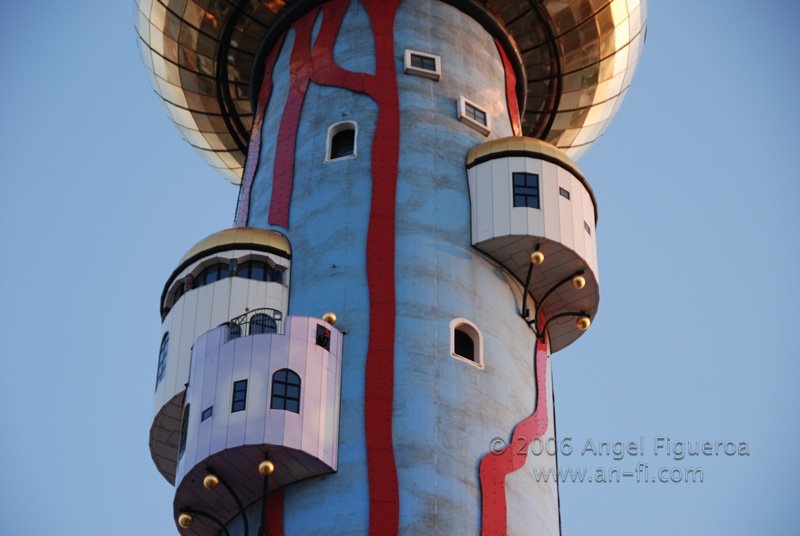
Maishima Island deserves more attention for a weekend getaway. There are stadiums, sports fields, small parks, a seaside promenade, a pottery village, rental lodges and camping sites. No shopping malls. Yet.
For more information on the Maishima plants, see Laura the Explora's write-up for Kansai Scene magazine and the Maishima Plant home page.
For more information on the Osaka Bay Side Area visit the Osaka Visitor's Guide.
On Sunday the annual Midosuji parade was held. I had never attended before so I didn't know what to expect. However, I had a feeling there would be more interesting things to photograph than the floats and parade participants. I was right.
I hardly took any pictures of the people walking in the parade. Instead, I watched the people watching the parade, and thus photographed a parade of humanity in all its charms and quirks. I want to keep the anonymity of the subjects and as a result there are many shots I elected not to upload to my gallery. (There are a couple of pictures, however, that clearly show a person's full facial features, and I have decided to include them in the project anyway). Generally my aim was to retain a detached observer's viewpoint and keep my subjects unidentifiable. When looking at the pictures, I hope it feels like we are really just looking at ourselves.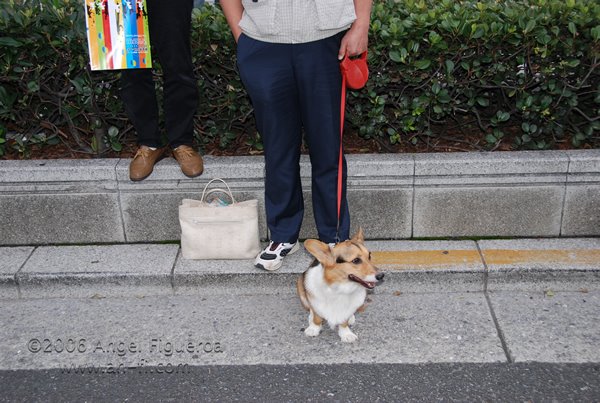
Go to my photo Web site to see the full gallery of 40 images.
I strolled around shinsaibashi.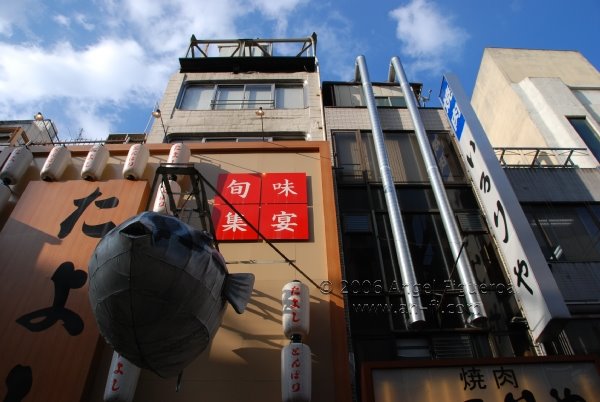 Blowfish and pipes.
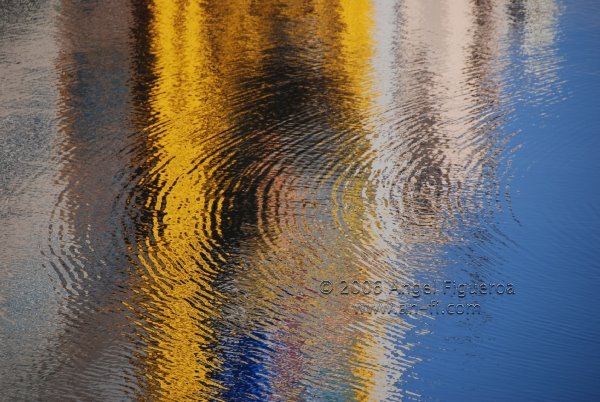 Reflection of Don Quijote building in Dotobori canal.
 Signage along Dotonbori.
 Sidewalk menu.
 Noodle shop.


